CleanEurasia Insights | Smart Washrooms and Connected Hygiene

Yet washroom cleaning has traditionally depended on fixed schedules, manual inspections and reactive interventions. Cleaning teams visit washrooms at predetermined times, refill dispensers based on visual checks and respond to complaints only after a problem has already affected the user experience.
This model is now changing.
Connected dispensers, occupancy sensors, water-management systems, digital inspection tools and artificial intelligence are transforming conventional washrooms into intelligent, data-producing environments.
The result is the emergence of the smart washroom: a connected hygiene ecosystem capable of identifying demand, communicating service requirements and helping facility teams make faster, more accurate decisions.
Smart washrooms are not simply about adding sensors to dispensers. They represent a broader transformation in how hygiene services are planned, delivered, measured and continuously improved.
From Scheduled Servicing to Demand-Based Hygiene
Traditional washroom management is usually based on time.
A cleaning team may be instructed to inspect a washroom every hour, regardless of whether the space has been used by 20 people or 500 people during that period.
This approach creates two common problems.
The first is over-servicing. Teams may repeatedly visit low-traffic washrooms even when no intervention is required.
The second is under-servicing. High-traffic washrooms can experience sudden demand between scheduled inspections, leading to empty dispensers, overflowing waste bins, wet floors or unacceptable hygiene conditions.
Connected washroom systems introduce a demand-based model.
Sensors and connected devices can monitor:
- Visitor traffic
- Washroom occupancy
- Soap levels
- Paper towel availability
- Toilet tissue consumption
- Waste-bin capacity
- Water usage
- Air quality
- Odour conditions
- Cleaning completion status
- Equipment performance
Instead of following the same routine across every location, cleaning teams can be directed to the areas where intervention is actually required.
This changes the central operational question from:
“When is the next scheduled inspection?”
to:
“Which washroom requires attention right now?”
That distinction can significantly improve efficiency, service quality and resource allocation.
What Is a Smart Washroom?
A smart washroom is a digitally connected hygiene environment in which fixtures, dispensers, sensors, cleaning teams and facility-management platforms communicate through a shared system.
The exact technology configuration depends on the building and its operational requirements, but a connected washroom ecosystem may include:
- Occupancy counters
- Footfall sensors
- Connected soap dispensers
- Smart toilet tissue systems
- Connected paper towel dispensers
- Waste-bin fill-level sensors
- Water-leak detection devices
- Touchless taps and flush systems
- Indoor air-quality monitors
- Odour monitoring sensors
- Digital cleaning checklists
- Mobile workforce applications
- User-feedback terminals
- Cloud-based reporting platforms
Each device generates operational data.
When this information is brought together in a central platform, facility managers gain a much clearer picture of how washrooms are being used and how services are performing.
The technology therefore creates value not through one individual device, but through the integration of multiple data points into a connected decision-making system.
The Role of IoT in Connected Hygiene
The Internet of Things, or IoT, enables physical devices to collect, exchange and analyse information.
Within a washroom, IoT technology can connect dispensers, sensors, cleaning equipment and management software.
A soap dispenser, for example, can communicate that its refill level has reached a defined threshold. A waste bin can alert the cleaning team before it overflows. An occupancy counter can identify an unexpected increase in visitor traffic. A leak detector can issue an immediate warning before water damage becomes serious.
These alerts can be delivered through:
- A facility-management dashboard
- A supervisor’s mobile device
- A cleaning operative’s application
- A central building-management platform
- Automated work-order software
This connectivity reduces the dependence on repeated manual inspections.
Cleaning professionals still remain essential, but their time can be used more intelligently. Instead of walking from washroom to washroom simply to check conditions, teams can be directed by real-time service requirements.
Connected Dispensers and Consumable Management
Soap, toilet tissue and paper towels are basic hygiene requirements, but they are also among the most common causes of washroom complaints.
An empty dispenser can damage the visitor experience within seconds.
Traditional refill management often depends on visual inspection. Staff open dispensers, estimate remaining stock and refill them according to personal judgement.
This process can result in:
- Premature refilling
- Product waste
- Inconsistent refill practices
- Emergency stock shortages
- Unnecessary inspection rounds
- Limited consumption visibility
Connected dispensers provide continuous information about product levels and usage patterns.
Facility teams can receive alerts when supplies fall below predetermined limits. The system can also help estimate how much stock will be required during different periods.
For example, a transport hub may experience very different consumption patterns during weekday commuter hours, public holidays and seasonal travel periods. An office building may require higher servicing during conferences or major internal events. A shopping centre may see a significant increase during weekends.
With historical data, managers can identify these patterns and improve inventory planning.
This supports a transition from reactive refilling to predictive consumable management.
Occupancy and Footfall Data
Visitor numbers are among the most valuable data points in smart washroom management.
Without occupancy information, cleaning frequency is often based on assumptions. However, washrooms located within the same building may experience completely different demand levels.
A washroom near a food court, conference hall or transport entrance may require significantly more attention than one located in a low-traffic administrative area.
Footfall sensors allow facility teams to understand:
- How many people use each washroom
- Which locations experience the highest demand
- At what times usage increases
- How cleaning schedules should be adjusted
- Whether additional facilities may be required
- How consumption relates to occupancy
- Which areas are over-serviced or under-serviced
This information can improve staffing decisions.
Rather than distributing labour equally, managers can allocate more resources to the highest-demand periods and locations.
Occupancy data can also support long-term facility planning. If a particular washroom consistently operates beyond its intended capacity, the information may justify refurbishment, expansion or redesign.
Real-Time Alerts and Faster Response
The value of connected hygiene lies not only in collecting data, but in making that data operational.
A smart washroom platform can generate alerts when:
- A dispenser is nearly empty
- A waste bin is approaching capacity
- Usage exceeds a defined threshold
- A water leak is detected
- A washroom has not been serviced
- A cleaning task is overdue
- Air-quality conditions deteriorate
- A user reports a problem
- Equipment stops functioning correctly
These alerts can automatically create tasks for the nearest available cleaning operative.
The system may also prioritise tasks according to urgency.
A low paper-towel level may require attention soon, while a water leak or blocked toilet may require immediate intervention.
This helps teams respond according to operational importance rather than simply completing tasks in chronological order.
Artificial Intelligence and Predictive Washroom Management
As more data becomes available, artificial intelligence can help identify patterns that may not be visible through manual analysis.
AI-powered platforms can analyse:
- Historic occupancy
- Consumable usage
- Cleaning frequency
- User feedback
- Seasonal demand
- Event schedules
- Building traffic
- Equipment performance
- Maintenance records
The system can then forecast future requirements.
For example, it may predict that a particular washroom will require servicing before the usual inspection time because visitor numbers are increasing faster than expected.
It may also estimate when dispensers will need refilling, when waste bins are likely to reach capacity or when certain fixtures are at risk of failure.
Predictive management allows teams to intervene before service quality declines.
This is particularly important in high-profile environments such as:
- Airports
- Hospitals
- Luxury hotels
- Convention centres
- Shopping centres
- Stadiums
- Corporate headquarters
- Premium retail locations
In these facilities, even a short service failure can affect hundreds of users and create a negative impression of the entire organisation.
Smart Washrooms and User Experience
Washroom quality is closely linked to customer satisfaction.
Visitors may not always comment when a washroom is clean, but they are likely to remember when it is not.
Common sources of dissatisfaction include:
- Missing soap
- No toilet tissue
- Full waste bins
- Wet floors
- Bad odours
- Long waiting times
- Broken fixtures
- Poor lighting
- Insufficient cleaning
- Delayed response to complaints
Connected hygiene systems help reduce these failures by improving visibility and response speed.
Digital feedback stations can also allow users to report problems directly.
A simple interface may ask visitors to rate cleanliness or select a specific issue. The information can then be delivered immediately to the service team.
This creates a direct connection between the user experience and the cleaning operation.
Rather than depending on delayed complaints or occasional inspections, managers receive real-time service feedback.
Supporting Infection Prevention
Washrooms are high-contact environments.
Door handles, taps, flush buttons, dispenser surfaces and other fixtures may be touched by large numbers of people throughout the day.
Smart washroom technology can support infection-prevention strategies through:
- Touchless dispensers
- Sensor-operated taps
- Automatic flushing
- Real-time soap availability monitoring
- Increased servicing during high-traffic periods
- Digital cleaning verification
- Rapid response to hygiene incidents
- Improved hand-hygiene compliance monitoring
The objective is not to remove human involvement, but to strengthen the consistency and traceability of hygiene procedures.
In healthcare facilities, educational institutions and transport environments, this level of visibility can be particularly valuable.
Connected systems can provide evidence that cleaning activities were completed, identify service gaps and help managers improve compliance with internal hygiene protocols.
Water Efficiency and Leak Detection
Water management is becoming an increasingly important part of sustainable facility operations.
Washrooms account for a meaningful share of water consumption in many commercial buildings.
Smart systems can support water efficiency through:
- Sensor-controlled taps
- Low-flow fixtures
- Automated flushing optimisation
- Real-time consumption monitoring
- Leak detection
- Abnormal usage alerts
- Remote shut-off systems
A small leak that continues unnoticed can waste a significant amount of water over time.
Connected sensors can identify unusual flow patterns and alert facility teams before the problem becomes more expensive.
Water data can also help managers compare performance across buildings, floors or individual washrooms.
This supports measurable sustainability targets rather than relying only on general environmental commitments.
Reducing Consumable Waste
Smart washroom systems can also help reduce the unnecessary use of paper, soap and other consumables.
Excessive consumption may result from:
- Incorrect dispenser settings
- Poor-quality dispensing mechanisms
- Overfilling
- Product theft
- Inefficient refill practices
- Equipment malfunction
- Lack of consumption data
Connected systems allow managers to compare usage with occupancy.
If one location consumes significantly more product per visitor than similar washrooms, the facility team can investigate the cause.
The solution may involve adjusting dispenser settings, replacing equipment, changing the consumable format or reviewing cleaning practices.
This type of operational insight can reduce costs while supporting environmental objectives.
Digital Cleaning Verification
Paper checklists remain common in washroom management.
However, they offer limited real-time visibility and can be difficult to verify.
Digital cleaning platforms allow staff to confirm completed tasks through mobile devices, QR codes, NFC tags or connected control panels.
A digital system may record:
- Who completed the task
- When it was completed
- Which tasks were performed
- Whether any issues were identified
- What consumables were replaced
- Whether additional maintenance is required
Supervisors can monitor service performance without being physically present at every location.
This improves accountability while reducing administrative work.
It also creates a reliable service history that can support audits, customer reporting and contract-performance reviews.
The Human Role in Smart Washroom Management
Technology does not eliminate the need for professional cleaning teams.
In fact, smart washrooms depend on trained personnel who can interpret information, respond appropriately and maintain high service standards.
Technology can identify that a washroom requires attention, but cleaning professionals are still responsible for:
- Assessing the actual condition
- Completing the required cleaning
- Handling unexpected incidents
- Performing detailed hygiene work
- Communicating with users
- Identifying maintenance issues
- Ensuring quality standards
- Managing sensitive environments
The greatest benefit comes from combining human judgement with digital intelligence.
Sensors provide visibility.
Data supports decisions.
People deliver the service.
This human-technology partnership is likely to define the next generation of washroom operations.
Applications Across Different Sectors
Airports and Transport Hubs
Passenger volumes can change rapidly according to flight schedules, delays and seasonal travel patterns.
Smart washrooms allow cleaning teams to respond dynamically rather than relying on fixed inspection intervals.
Hotels
Washroom quality affects both guest experience and brand reputation.
Connected systems can support public-area washrooms, conference facilities, restaurants, spas and staff areas.
Hospitals and Healthcare Facilities
Real-time monitoring, cleaning verification and consumable availability can support infection-prevention programmes and hygiene compliance.
Shopping Centres
Footfall varies significantly according to time, location and event activity. Connected washrooms can improve service levels during peak periods.
Office Buildings
Hybrid working has made fixed cleaning schedules less efficient. Occupancy data helps align servicing with actual workplace use.
Educational Facilities
Universities and schools experience strong fluctuations between class times, breaks and events. Smart systems can help respond to these patterns.
Stadiums and Event Venues
Demand can increase dramatically within a very short period. Predictive servicing and real-time alerts are particularly valuable in these environments.
Challenges to Consider
Although the benefits are significant, smart washroom implementation requires careful planning.
Facility managers should consider:
- Initial investment costs
- Compatibility between different systems
- Connectivity requirements
- Data security
- Staff training
- Sensor maintenance
- Platform usability
- Integration with existing facility-management software
- Clear performance objectives
- Long-term service and support
Technology should not be installed simply because it is available.
The system must solve a defined operational problem.
A successful project begins by identifying measurable objectives, such as:
- Reducing complaints
- Improving refill availability
- Lowering water consumption
- Reducing unnecessary inspections
- Increasing service transparency
- Improving response times
- Optimising labour allocation
The selected technology should then be evaluated according to its ability to support these goals.
From Data Collection to Measurable Value
Collecting more data does not automatically create a smarter operation.
Facility managers must transform information into action.
The most useful performance indicators may include:
- Complaints per thousand visitors
- Average response time
- Consumable usage per visitor
- Cleaning tasks completed on time
- Water consumption per washroom
- Emergency refill frequency
- Equipment downtime
- User-satisfaction scores
- Labour hours per service level
- Number of unnecessary inspections avoided
These indicators help organisations understand whether technology is improving performance.
They also make it easier to demonstrate the value of cleaning operations to building owners, management teams and clients.
Smart Washrooms and ESG Reporting
Environmental, social and governance objectives are becoming increasingly important across the built environment.
Washroom operations can contribute to ESG performance through:
- Reduced water consumption
- Lower paper usage
- More efficient chemical use
- Reduced transport and servicing activity
- Better hygiene conditions
- Improved accessibility
- Transparent service reporting
- More efficient labour deployment
Connected systems can produce measurable data to support sustainability reports.
This is a major advantage because organisations are increasingly expected to demonstrate progress with evidence rather than general statements.
Smart hygiene technology therefore supports both operational improvement and corporate reporting.
The Future of Connected Hygiene
Over the next decade, smart washrooms are expected to become more integrated with wider building-management systems.
Future developments may include:
- AI-powered demand forecasting
- Automated cleaning-task allocation
- Building-wide hygiene dashboards
- Integration with digital twins
- Advanced odour and air-quality analytics
- Autonomous washroom-cleaning robots
- Voice-free user interfaces
- Predictive fixture maintenance
- Personalised accessibility features
- Real-time ESG reporting
- Cross-building performance benchmarking
The washroom will no longer operate as an isolated service area.
It will become part of a connected facility ecosystem in which occupancy, cleaning, maintenance, energy, water and user-experience data are analysed together.
A Strategic Opportunity for the Professional Cleaning Industry
The development of smart washrooms creates opportunities for many parts of the professional cleaning and hygiene sector.
These include:
- Dispenser manufacturers
- Tissue and consumable producers
- Chemical companies
- Sensor-technology providers
- Software developers
- Facility-management companies
- Cleaning contractors
- Robotics manufacturers
- Building-automation specialists
- Sustainability consultants
The companies that succeed will be those that move beyond selling individual products and begin offering integrated solutions.
Customers increasingly want systems that can improve performance, reduce waste, generate data and integrate with existing operational platforms.
The future market will therefore be shaped by collaboration between manufacturers, technology providers, service companies and facility operators.
Discover Connected Hygiene at CleanEurasia 2026
The transformation of washroom management will be one of the important themes shaping the future of professional cleaning.
At CleanEurasia 2026, manufacturers, technology providers, distributors, cleaning contractors and facility-management professionals will come together to explore the latest developments in:
- Smart dispensers
- Touchless hygiene systems
- Connected washroom platforms
- IoT sensors
- Professional tissue solutions
- Water-saving technologies
- Digital cleaning management
- Air-quality monitoring
- Sustainable hygiene products
- Data-driven facility operations
The exhibition will provide a platform for companies to introduce new solutions, develop distribution partnerships and connect with decision-makers from Türkiye, Eurasia, the Balkans, Central Asia and the MENA region.
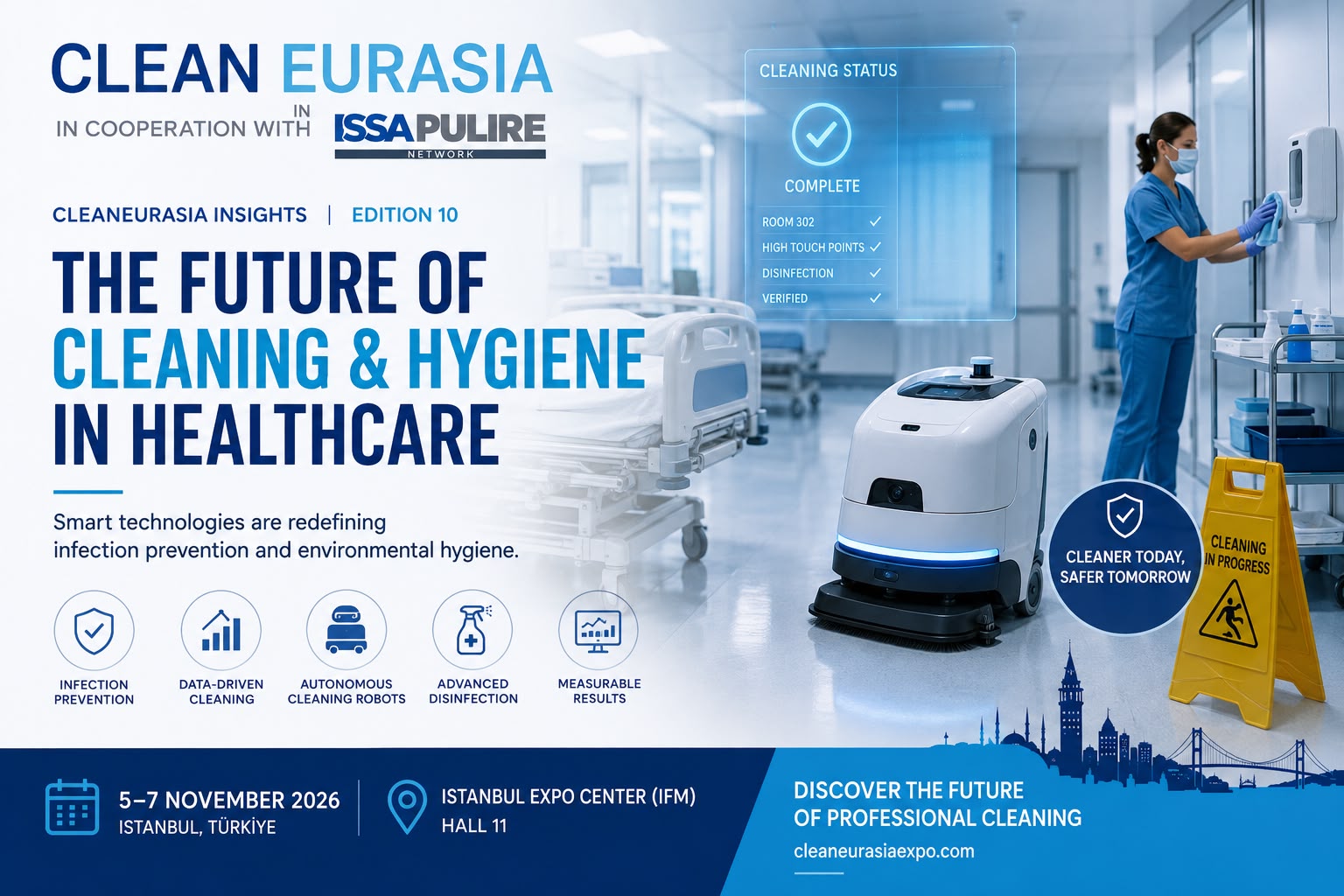
📅 5–7 November 2026
📍 Istanbul Expo Center
.jpeg)
