Future of Cleaning | Eurasia Insights Edition 3 — Smart Washrooms
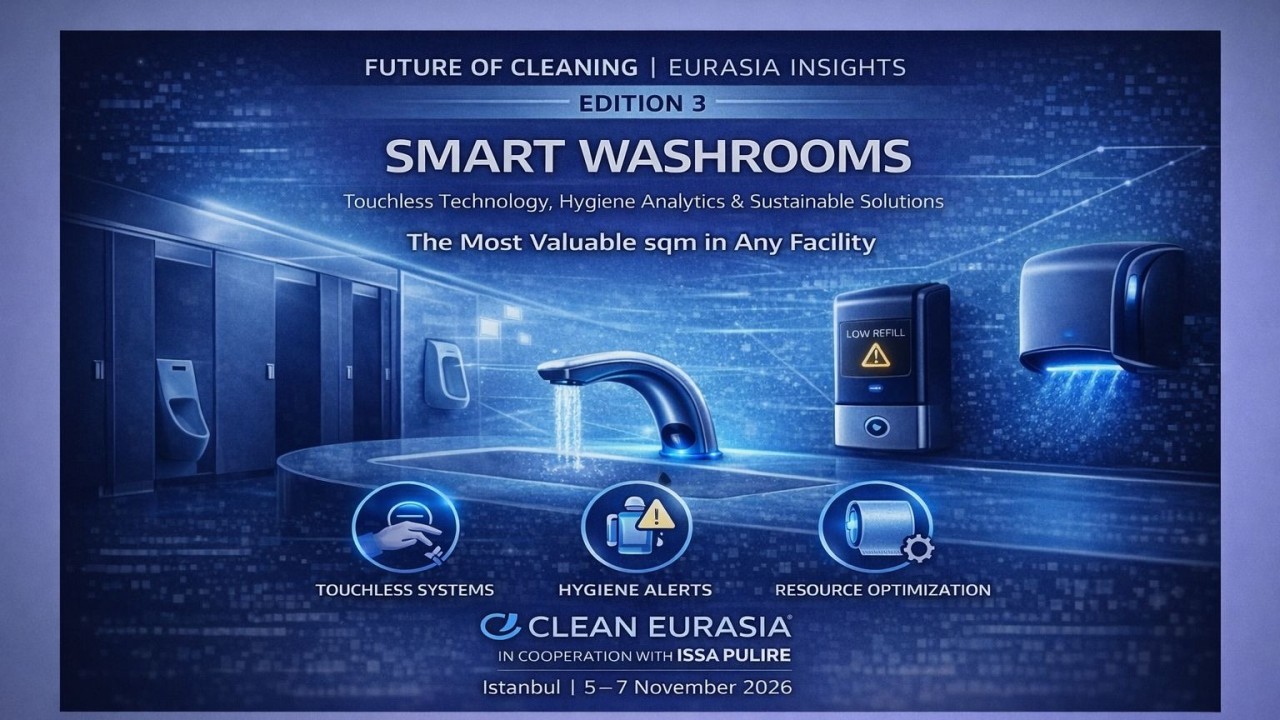
The Rise of Smart Washrooms Smart washrooms combine touchless technology, sensors and data analytics to improve hygiene standards while reducing operational inefficiencies. The global smart washroom market is expanding rapidly as facilities prioritize: • Hygiene transparency • Resource optimization • Sustainable consumption Industry estimates suggest: * The global smart washroom solutions market is expected to exceed USD 8–10 billion by 2030 * Touchless systems can reduce cross-contamination risks by up to 80% * Smart dispensers can reduce paper and soap consumption by 30–40% * Sensor-based refill alerts reduce unnecessary staff checks by 50% or more Touchless Technology is Becoming the New Standard Post-pandemic expectations have permanently changed user behavior. Visitors increasingly expect: * Sensor-based faucets * Automatic soap dispensers * Touchless hand dryers * Smart paper towel systems For facility operators, this shift is not only about hygiene — it is about operational efficiency and brand perception. Data is Transforming Washroom Management Modern smart washrooms can generate real-time operational data such as: * Usage frequency * Refill levels * Maintenance alerts * Peak traffic periods This allows facility managers to move from: Routine inspection → Data-driven service Cleaning staff are dispatched when needed, not when scheduled. Sustainability and Cost Control Smart washroom technologies are also playing a major role in sustainability strategies. Controlled dispensing systems help facilities: * Reduce paper waste * Lower water consumption * Optimize soap usage * Decrease logistics and refill frequency For large facilities, this can translate into significant annual cost reductions. Eurasia: A Major Growth Opportunity While adoption of smart washroom systems is accelerating in Western Europe and North America, many facilities across Eurasia still operate with traditional infrastructure. This creates a major opportunity for: * Technology providers * Washroom equipment manufacturers * Distributors and facility solution companies As new airports, commercial centers and office complexes continue to develop across the region, smart hygiene infrastructure will become a key competitive advantage. CleanEurasia Perspective At CleanEurasia 2026, washroom hygiene technologies will be a major focus area bringing together: * Global manufacturers * Regional distributors * Facility management companies * High-volume buyers Because the future of cleaning is not only about machines or robotics. It is also about how everyday spaces are managed more intelligently.