CLEANEURASIA INSIGHTS | SMART FACILITIES & CONNECTED CLEANING

Introduction
Facility management is undergoing one of the most significant transformations in its history. Rising labor costs, increasing sustainability expectations, digitalization and growing customer demands are reshaping how commercial buildings are maintained worldwide.
Cleaning operations are no longer viewed simply as a support service. They have become an essential component of operational efficiency, occupant wellbeing and environmental performance.
Today, artificial intelligence (AI), Internet of Things (IoT) technologies and connected building systems are enabling facility managers to make smarter decisions based on real-time information rather than fixed schedules.
From airports and hospitals to hotels, shopping malls, manufacturing facilities and office buildings, organizations are increasingly investing in intelligent cleaning ecosystems that optimize resources while improving cleaning quality.
This shift is redefining the future of professional cleaning.
From Scheduled Cleaning to Smart Cleaning
For decades, commercial cleaning followed predefined schedules.
Regardless of occupancy levels or actual cleanliness, areas were cleaned at fixed intervals.
While this approach ensured consistency, it also resulted in unnecessary labor hours, excessive chemical consumption and inefficient resource allocation.
Connected cleaning introduces an entirely different model.
Sensors installed throughout facilities continuously monitor occupancy, foot traffic, waste levels, restroom usage and indoor environmental conditions.
Instead of asking:
"When should we clean?"
Facility managers now ask:
"Where is cleaning actually needed right now?"
This data-driven approach significantly improves operational efficiency.
AI Is Becoming the Brain of Modern Facilities
Artificial intelligence is no longer limited to autonomous robots.
Modern AI platforms analyze millions of data points collected from connected buildings every day.
These systems can automatically:
- Predict cleaning demand
- Optimize workforce allocation
- Recommend cleaning frequencies
- Detect operational inefficiencies
- Monitor equipment utilization
- Generate sustainability reports
Rather than replacing facility teams, AI enhances decision-making by providing actionable insights.
Cleaning managers spend less time reacting to issues and more time improving operational performance.
The Rise of Connected Cleaning Ecosystems
Modern cleaning operations increasingly consist of interconnected technologies rather than standalone equipment.
These ecosystems may include:
- Autonomous floor cleaning robots
- Smart chemical dosing systems
- IoT-enabled dispensers
- Occupancy sensors
- Air quality monitoring devices
- Smart washrooms
- Digital inspection platforms
- Mobile workforce management applications
When integrated into a centralized platform, these technologies provide complete visibility across an entire facility.
Facility managers can monitor operations remotely while receiving instant alerts when intervention is required.
Sustainability Through Intelligence
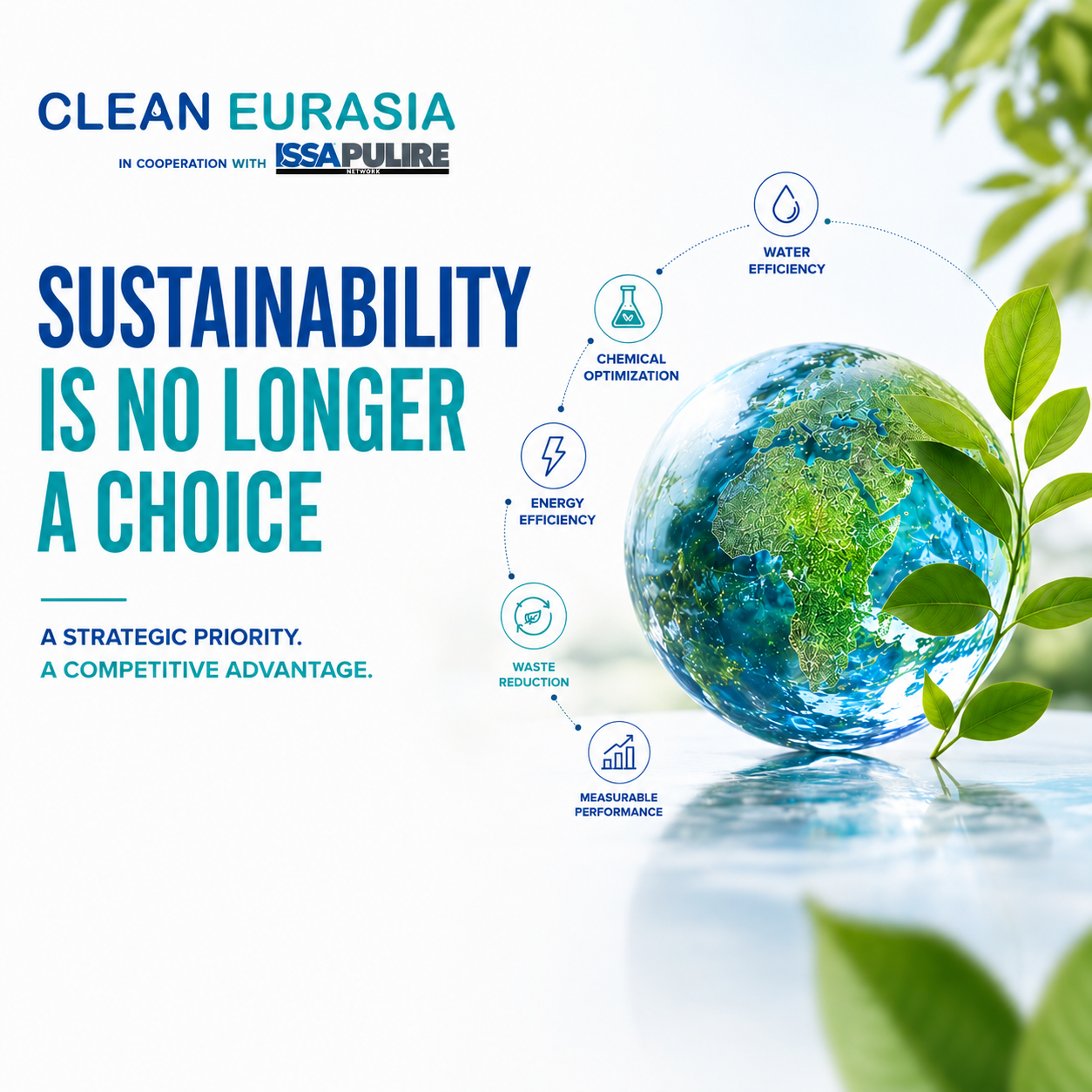
Environmental responsibility has become a strategic priority for organizations worldwide.
Smart cleaning contributes directly to ESG objectives by reducing unnecessary resource consumption.
Connected systems help organizations decrease:
- Water consumption
- Chemical usage
- Energy demand
- Equipment downtime
- Carbon emissions
Cleaning becomes both more efficient and more sustainable.
This combination delivers measurable environmental and financial benefits.
Predictive Cleaning Is Replacing Reactive Cleaning
Traditional cleaning responds after problems appear.
Predictive cleaning anticipates needs before they become visible.
By analyzing historical patterns, occupancy data and sensor information, AI systems can forecast:
- Restroom demand
- High-traffic periods
- Waste collection requirements
- Floor maintenance cycles
- Equipment servicing schedules
This proactive approach minimizes disruptions while improving user experience.
The Human Workforce Remains Essential
Automation does not eliminate the need for skilled cleaning professionals.
Instead, it changes how people work.
Robots perform repetitive, large-area cleaning tasks.
Human teams focus on:
- Detail cleaning
- Quality inspections
- Infection prevention
- Guest interaction
- Problem solving
- Specialized cleaning procedures
The future belongs to collaborative workplaces where people and intelligent technologies operate together.
Looking Toward 2035
Over the next decade, facility management will become increasingly autonomous.
Industry experts anticipate rapid growth in:
- AI-powered facility operations
- Digital twins for buildings
- Robotics-as-a-Service (RaaS)
- Predictive maintenance
- Connected cleaning fleets
- Autonomous service robots
- Indoor environmental analytics
- ESG performance monitoring
These technologies will redefine operational excellence across commercial real estate.
Why This Matters
Organizations are no longer investing in technology simply to automate cleaning.
They are investing to improve resilience, sustainability, operational efficiency and customer satisfaction.
Smart facilities represent the next evolution of professional cleaning.
Companies that embrace digital transformation today will be better positioned to meet tomorrow's operational challenges.
Discover the Future at CleanEurasia 2026
As the leading meeting point for the professional cleaning and hygiene industry across Eurasia, MENA, the Balkans, CIS and Central Asia, CleanEurasia 2026 will showcase the latest innovations in AI, robotics, IoT, autonomous cleaning systems and smart facility management.
Industry leaders, technology providers and decision-makers will come together to explore the solutions shaping the next generation of commercial cleaning.
Join us in Istanbul and experience the future of professional cleaning.
📍 Istanbul Expo Center
📅 5–7 November 2026